Anadolu Kavagi
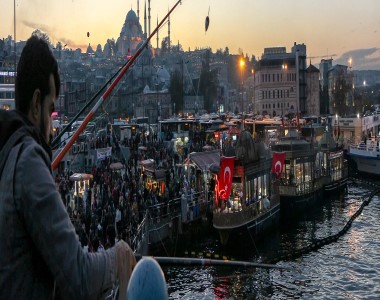
Visiting Istanbul and not taking a boat tour of the Bosphorus is surely something you would regret. Geographical and strategic significance aside, this strait holds so much history, memories of times gone by; of ships making their way through the dangerous curves, of trading caravans passing to get from one continent to the other, of great fleets of warships on their conquests, of different cultures and worlds mixing both in peace and conflict.
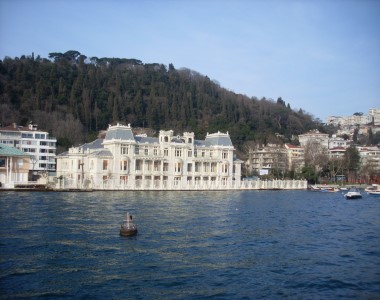
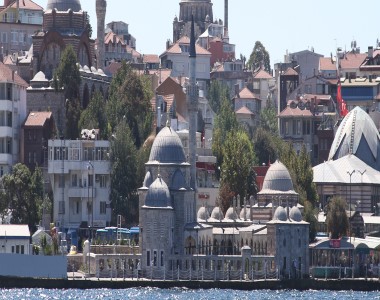
A full cruise only takes about 90 minutes and is rather affordable, so it’s a lovely way for you to escape the rush and the noise of the big city packed with tourists and locals, while enjoying a unique view of glamorous palaces built in various architectural styles, mosques on the very shore, magnificent bridges connecting two continents, forts, towers and lighthouses constructed on carefully picked strategic locations and Yali’s, small sea-houses, characteristic for the Ottoman culture. So, why not choose between public transport, leaving regularly from Kadiköy and Eminönü, or one of many private operators, and embark on this must-see boat tour of Istanbul?
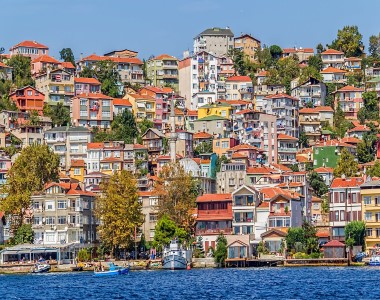
When you’ve decided to do it, boarded the ferry or a municipal boat, and enjoyed the sailing, you will find yourself at the last stop of the tour, at the very confluence of the Bosphorus and the Black Sea, which is a sight that can’t be described. Right there, where green meets blue, on the very north of the Anatolian (Asian) side of Istanbul, lies Anadolu Kavagi, a beautiful area protected from urbanisation. Here you are protected from the everyday crowds of tourist-packed, concrete covered parts of the city, and you can enjoy a relaxing time-out from all the commotion.
You will arrive at the square in the small village of Anadolu Kavagi, which has lent its name to the whole area, and the ferry will not be going back for a couple of hours. This means you have plenty of time to walk around and explore. The villagers have, naturally, relied upon fishing for income for centuries, but the strategically important location at the entrance of the Bosphorus has done them some harm throughout history, besides making it prosperous. Most notably, perhaps, the village was burned down during an unsuccessful overtaking of the Yoros Castle, which is located just north of it, by Byzantinians.
However, fishing is not the only occupation this village was known for in past times. It is recorded that the docks of the village were used to harbour ships into safety during bad weather, mostly trading ships on their way through the Bosphorus. Due to its advantageous position, it is thought that at times, there were as many as 300 ships docked there. There are also rumours of a more notorious trade employed by the villagers in the past, which is intentional wrecking of merchant ships. It’s said that they would use their advantageous location to confuse and mislead sailors by lighting fires, and raiding the wrecks after they hit the rocks.
Today, it is a lovely, touristic place which can occupy your attention for a long while, and offer you a pleasant day, regardless of the season and the weather. You can enjoy fresh fish in one of its numerous restaurants, buy souvenirs at the gift shops, or sit down at one of the tea houses and enjoy a cup of tea, with a splendid view of the Bosphorus.
If you are willing to walk for a bit, you should probably take the Caferbaba Sokagi to the Yoros Castle on the hill. It’s a steep path that takes up to around 25 minutes, but it is one worth taking, if not for the castle, then definitely for the mesmerising view of the confluence. The castle itself was built by the Byzantinians in the 12th century to control the passage of ships through the Bosphorus, but it changed owners a couple of times throughout history, which is not surprising considering its strategic importance; this is fully understood once you’ve seen the view from it. For 40 years, in the 15th century, it was occupied by the Genoese, which is why it is also known as Genoese Castle. It has even been used for military purposes by the Turkish government in recent times, but today it is open for visits, unless there are excavations or reconstructions going on.
If you choose not to go back by ferry, there is always the public bus service connecting you to Beykoz or Kanlica, and then to Taksim or Uskudar. If the magic of the place catches too much, you can spend a night in a nice hotel down in the village, and experience its true ambience, especially in the evening.
Visit Hours: The Anatolian Castle is opened daily and only outer walls can be visited.